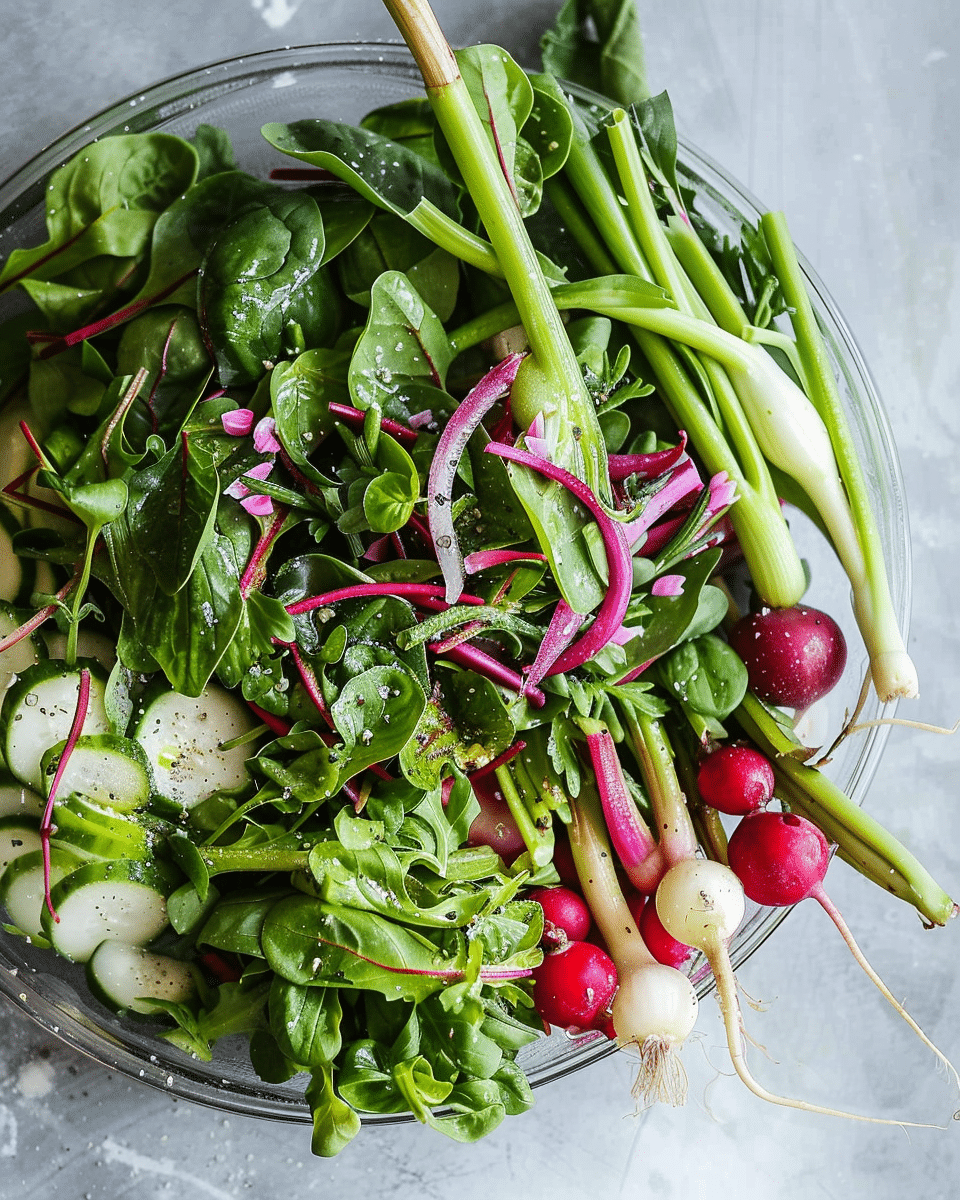
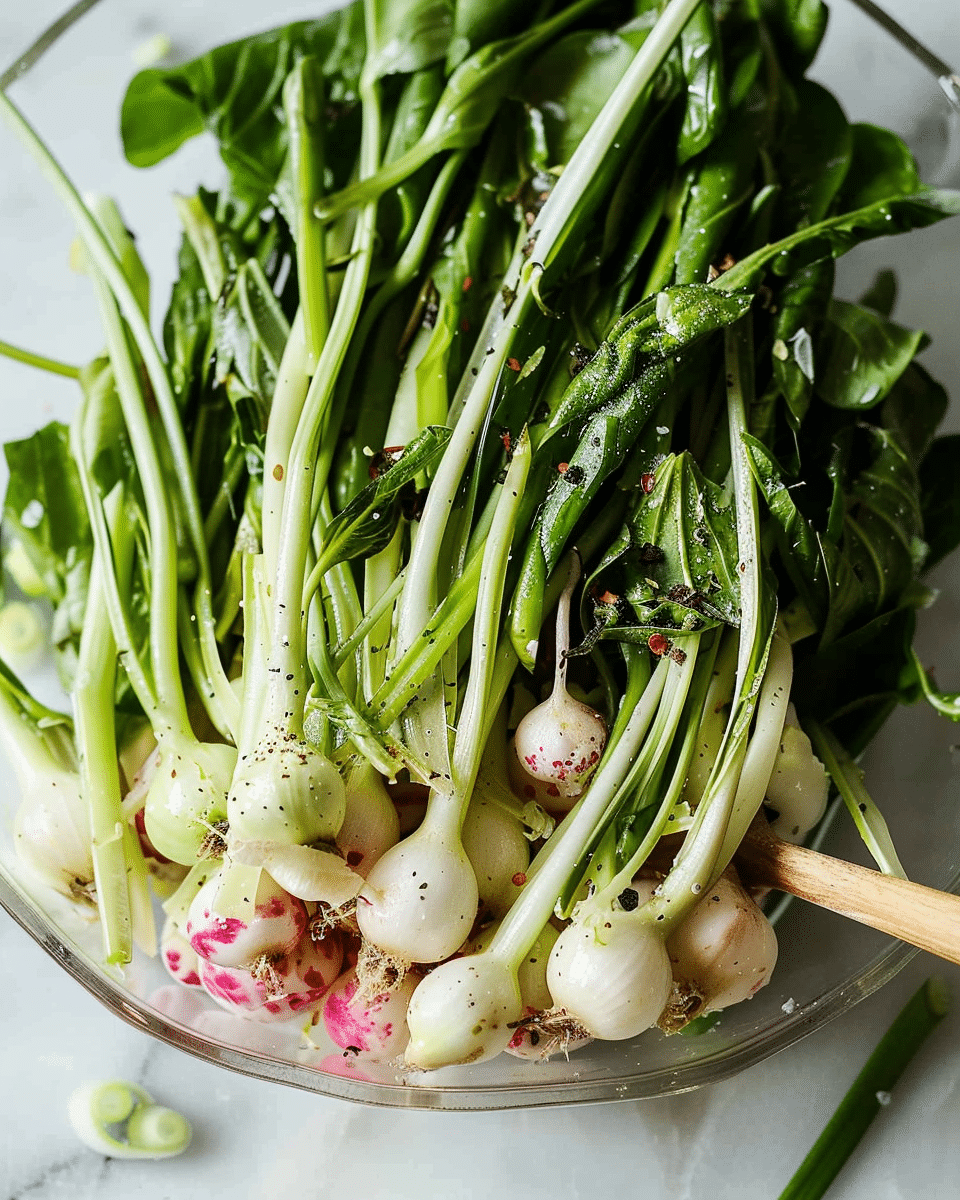
I love this approach because it doesn’t rely on strict rules or complicated planning. I simply follow what’s fresh and available, and that naturally improves the flavor of my meals. It also helps me feel more in tune with my body since my cravings shift toward lighter, brighter foods. I find it refreshing, flexible, and easy to maintain without feeling restrictive.
Ingredients
(Here’s a tip: Check out the full list of ingredients and measurements in the recipe card below.)
arugula
spinach
lettuce
watercress
chard
peas
asparagus
green beans
artichokes
radishes
fennel
cucumbers
cabbage
cauliflower
broccoli
parsley
cilantro
mint
chives
dill
basil
lemons
grapefruit
strawberries
rhubarb
green onions
leeks
spring garlic
shallots
fava beans
morel mushrooms
Directions
I begin by gradually swapping out heavier winter ingredients for lighter spring produce. I start adding leafy greens like spinach or arugula into my meals, whether in salads, wraps, or as simple sides.
Next, I bring in fresh herbs to brighten flavors. I chop parsley, mint, or dill and mix them into dishes to give everything a fresh lift.
I also start incorporating crisp vegetables like radishes, cucumbers, and asparagus. I keep preparation simple by lightly steaming, roasting, or even eating them raw to preserve their natural taste.
To balance flavors, I add citrus like lemon or grapefruit. I squeeze fresh juice over meals to enhance brightness and help tie everything together.
Finally, I experiment with seasonal specialties like fava beans or morel mushrooms when I find them. I treat them simply so their natural flavors stand out.
Servings and timing
I treat this as a flexible way of eating rather than a fixed recipe. I typically prepare meals for 2 to 4 servings at a time, and most dishes come together within 20 to 30 minutes depending on the ingredients I use.
Variations
I like to adjust based on what I find at the market. Sometimes I focus more on raw salads when the weather warms up, while other days I lightly cook vegetables for a softer texture. I also mix grains or proteins into my meals if I want something more filling. The variety keeps things interesting and helps me avoid repeating the same meals.
storage/reheating
I store fresh produce properly to keep it lasting longer, especially leafy greens and herbs. When I prepare meals ahead, I keep dressings separate to maintain freshness. For reheating, I use gentle heat so vegetables don’t lose their texture or flavor.
FAQs
What does eating seasonally in spring mean?
I focus on foods that naturally grow during spring, choosing fresh produce that’s at its peak in flavor and nutrition.
Why do I feel better eating seasonal foods?
I notice that seasonal foods match what my body needs at that time of year, making meals feel lighter and easier to digest.
Can I still eat non-seasonal foods?
I can, but I try to prioritize seasonal ingredients since they taste better and feel more aligned with the season.
How do I start transitioning from winter to spring foods?
I slowly replace heavy ingredients with fresh greens, herbs, and lighter vegetables instead of changing everything at once.
Are seasonal ingredients more nutritious?
I find that fresh, in-season produce often has better flavor and higher nutrient content compared to out-of-season options.
Conclusion
I see seasonal eating in spring as a natural shift rather than a strict change. By bringing in fresh greens, herbs, and lighter ingredients, I create meals that feel more energizing and balanced. It’s a simple way to reconnect with food and enjoy what the season naturally offers.
Fresh guide to eating seasonally in spring with simple tips, vibrant produce ideas, and easy ways to transition your meals into lighter, healthier spring eating habits.
Gradually replace heavier winter ingredients with lighter spring produce.
Add leafy greens like spinach or arugula into salads, wraps, or side dishes.
Incorporate fresh herbs such as parsley, mint, or dill to enhance flavor.
Include crisp vegetables like radishes, cucumbers, and asparagus; serve raw, lightly steamed, or roasted.
Add citrus like lemon or grapefruit juice to brighten and balance dishes.
Experiment with seasonal specialties like fava beans and morel mushrooms, keeping preparation simple to highlight natural flavors.
Notes
Keep preparation minimal to preserve freshness and nutrients.
Adjust ingredients based on what’s available locally.
Combine with grains or proteins for more filling meals.
Store greens and herbs properly and keep dressings separate until serving.