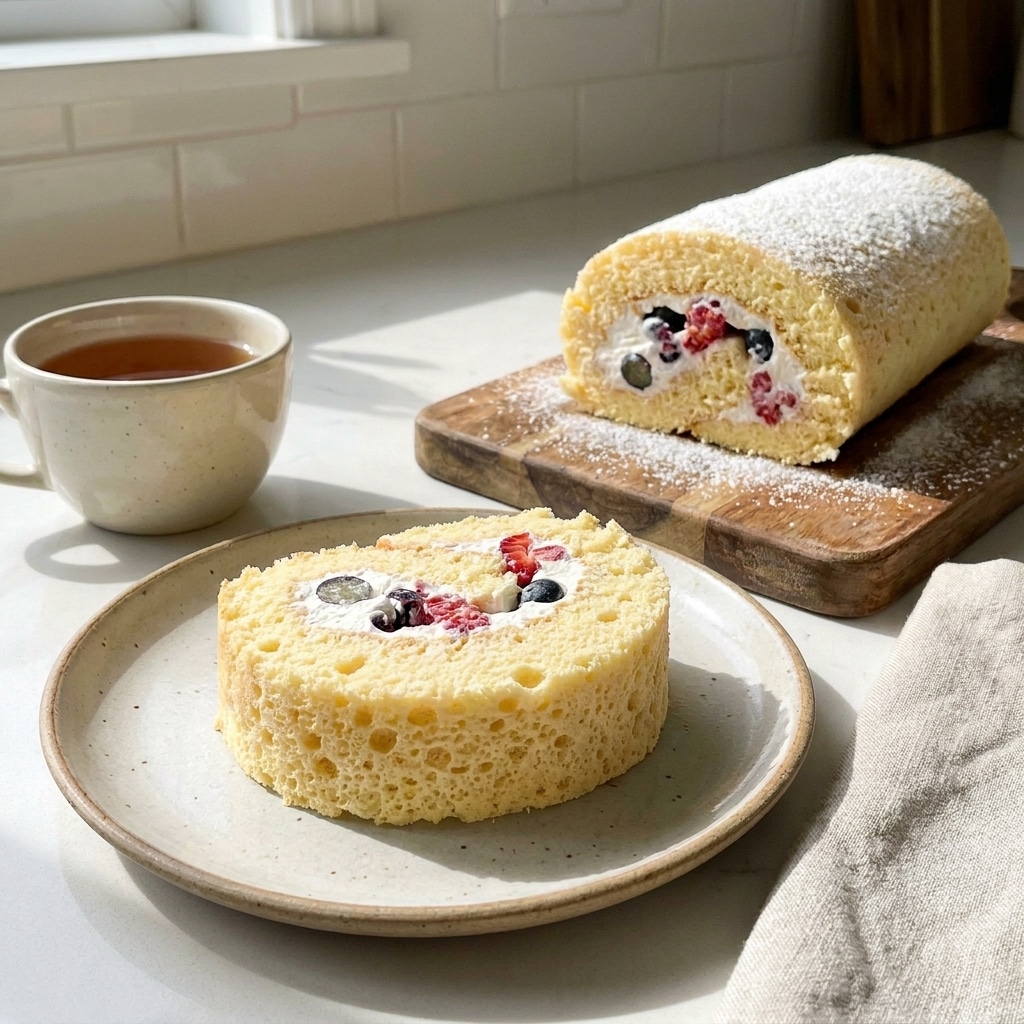
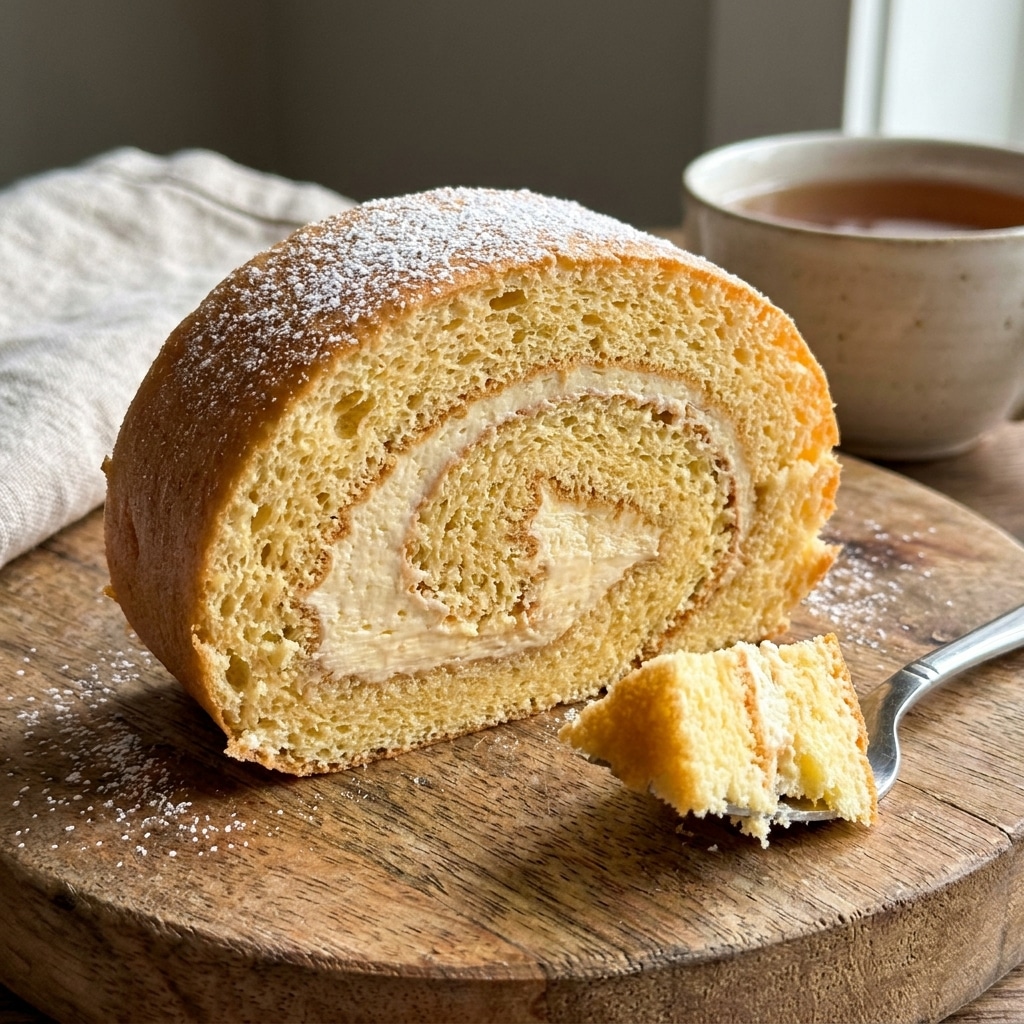
I enjoy this recipe because it creates an incredibly soft sponge with a melt-in-your-mouth texture. Unlike heavier cakes, this Swiss roll stays light and delicate while still offering a rich flavor from the eggs and milk.
I also appreciate how versatile it is. I can serve it plain, dust it with powdered sugar, or fill it with whipped cream, fruit, or jam for a more elaborate dessert.
Ingredients
(Here’s a tip: Check out the full list of ingredients and measurements in the recipe card below.)
5 large eggs (60–65g each) 40 g corn oil 60 g milk 60 g cake flour (low-gluten flour) 50 g white sugar 3 g lemon juice
Directions
Step 1: Preparation
I begin by preheating the oven to 150°C with both top and bottom heat.
I prepare two clean, dry bowls, making sure they are completely free of oil and water. I separate the egg whites and egg yolks into the two bowls.
To help the egg whites whip more easily, I place the bowl of egg whites in the freezer for about 10 minutes.
Step 2: Make the Egg Yolk Batter
In a separate bowl, I whisk together the corn oil and milk until fully emulsified.
I sift the cake flour into the liquid mixture and stir until there are no lumps remaining.
Next, I add the egg yolks and gently fold the mixture using a “Z” motion until the batter becomes smooth and glossy.
Step 3: Whip the Egg Whites
After removing the egg whites from the freezer, I add the lemon juice.
Using an electric mixer, I whip the egg whites on high speed until large bubbles form.
I gradually add the sugar in three additions. After each addition, I continue whipping until the bubbles become finer and the meringue develops more structure.
I stop whipping when soft peaks form. When I lift the whisk, the peaks should gently curve over rather than stand completely upright.
Step 4: Combine the Batter
I carefully fold one-third of the whipped egg whites into the egg yolk batter.
Once incorporated, I add the remaining egg whites and gently fold until the batter is smooth and fully combined. I take care not to overmix so the batter remains light and airy.
Step 5: Baking
I line a baking tray with parchment paper and pour the batter onto the tray.
Using a spatula, I spread the batter evenly and smooth the surface.
I gently tap the tray on the counter to remove large air bubbles.
I bake the cake at 150°C for 20 minutes. Then I increase the top heat to 160°C while keeping the bottom heat at 150°C and continue baking for another 10 minutes.
The cake is ready when it becomes golden brown and springs back lightly when touched.
Step 6: Rolling the Cake
After baking, I transfer the cake to a cooling rack and allow it to cool until it is warm to the touch.
I place a fresh sheet of parchment paper over the cake and carefully flip it over. Then I gently remove the original parchment paper.
While the cake is still warm and flexible, I place a rolling pin at one edge and begin rolling the cake with the help of the parchment paper.
As I roll, I pull the parchment paper back to prevent it from getting trapped inside the roll.
Once fully rolled, I gently tighten the roll with a spatula and allow it to set for 30 minutes.
Step 7: Slice and Serve
After the cake has set, I slice it into even portions and serve.
Servings and timing
Servings: 4 servings
Prep Time: 30 minutes
Cook Time: 30 minutes
Setting Time: 30 minutes
Total Time: 1 hour 10 minutes
Variations
I sometimes spread whipped cream inside the cake before rolling it for a classic bakery-style Swiss roll.
For a fruity version, I add fresh strawberries, mango slices, or a thin layer of jam.
When I want a richer flavor, I incorporate a small amount of matcha powder, cocoa powder, or coffee extract into the batter.
I also enjoy filling the roll with sweetened cream cheese for a tangy contrast.
storage/reheating
I store the Swiss roll in an airtight container in the refrigerator for up to 3 days.
If the cake contains whipped cream or fresh fruit filling, I always keep it refrigerated.
Before serving, I like letting the cake sit at room temperature for 10 to 15 minutes so the texture becomes softer and more delicate.
I do not recommend reheating the Swiss roll, as it is best enjoyed at room temperature or slightly chilled.
FAQs
Why did my Swiss roll crack when rolling?
I find that rolling the cake while it is still warm helps prevent cracks. Overbaking can also make the sponge less flexible.
Can I make this Swiss roll without cake flour?
Yes, I can make a substitute by combining all-purpose flour with a small amount of cornstarch, though cake flour produces the softest texture.
What are soft peaks in meringue?
Soft peaks form when the whipped egg whites hold their shape but gently bend over when the whisk is lifted.
Can I add a filling to this Swiss roll?
Yes, I often use whipped cream, fruit preserves, cream cheese filling, or chocolate spread.
How do I keep the cake soft?
I store it in an airtight container to prevent it from drying out and avoid overbaking during preparation.
Conclusion
This Chinese Swiss Roll is a beautifully soft and fluffy cake that showcases the delicate texture loved in many Asian-style sponge cakes. I enjoy making it because it is light, elegant, and versatile enough to serve plain or with a variety of fillings. Whether I prepare it for a special occasion or a simple afternoon treat, it always delivers a wonderfully airy and satisfying dessert.
This Chinese Swiss Roll Recipe – Soft and Fluffy creates a light, airy sponge cake with a delicate texture that rolls beautifully and melts in your mouth.
Author:Sarah
Prep Time:30 minutes
Cook Time:30 minutes
Total Time:1 hour 10 minutes
Yield:4 servings
Category:Dessert
Method:Baking
Cuisine:Chinese
Diet:Vegetarian
Ingredients
5 large eggs (60–65g each), separated
40 g corn oil
60 g milk
60 g cake flour (low-gluten flour)
50 g white sugar
3 g lemon juice
Instructions
Step 1: Preparation
Preheat the oven to 150°C (300°F) using top and bottom heat.
Prepare two clean, dry mixing bowls—one for the egg whites and one for the egg yolks. Ensure both bowls are completely free of oil and water.
Separate the eggs, placing the whites in one bowl and the yolks in another.
Place the bowl of egg whites in the freezer for 10 minutes to help them whip more easily.
Step 2: Make the Egg Yolk Batter
In a medium bowl, whisk together the corn oil and milk until fully emulsified.
Sift the cake flour into the mixture and stir until smooth with no dry flour remaining.
Add the egg yolks and gently mix using a spatula in a “Z” motion until the batter becomes smooth and glossy.
Set aside.
Step 3: Whip the Egg Whites
Remove the chilled egg whites from the freezer and add the lemon juice.
Using an electric mixer, beat on high speed for about 50 seconds until large bubbles appear.
Add the sugar gradually in three additions:
First addition: Beat until large bubbles form.
Second addition: Continue beating until the bubbles become finer.
Final addition: Beat until soft peaks form. The meringue should curve slightly when the whisk is lifted.
Step 4: Combine the Batter
Gently fold one-third of the whipped egg whites into the egg yolk batter using a spatula.
Add the remaining meringue and carefully fold until fully incorporated and no streaks remain.
Avoid overmixing to preserve the airy texture.
Step 5: Bake the Cake
Line a baking tray or Swiss roll pan with parchment paper.
Pour the batter into the tray and spread evenly with a spatula.
Tap the tray lightly on the countertop to remove large air bubbles.
Bake at 150°C (300°F) for 20 minutes.
Increase the top heat to 160°C (320°F) while keeping the bottom heat at 150°C (300°F) and bake for another 10 minutes.
The cake is ready when the surface is golden brown and springs back lightly when touched.
Step 6: Roll the Cake
Remove the cake from the oven and place it on a cooling rack.
Allow it to cool until warm but still flexible.
Place a fresh sheet of parchment paper over the cake and carefully invert it.
Gently peel away the original parchment paper.
While warm, roll the cake tightly using the parchment paper as support.
Use a spatula to gently tighten the roll and help it maintain its shape.
Let the rolled cake rest and set for 30 minutes.
Step 7: Slice and Serve
Once set, slice the Swiss roll into even portions.
Serve and enjoy the soft, fluffy texture.
Notes
Use cake flour for the lightest and most delicate sponge texture.
Soft peaks are essential for creating the characteristic fluffy crumb.
Roll the cake while it is still warm to prevent cracking.
For a filled Swiss roll, spread whipped cream, jam, or fruit filling before rolling.
Store covered at room temperature for 1 day or refrigerate for up to 3 days.