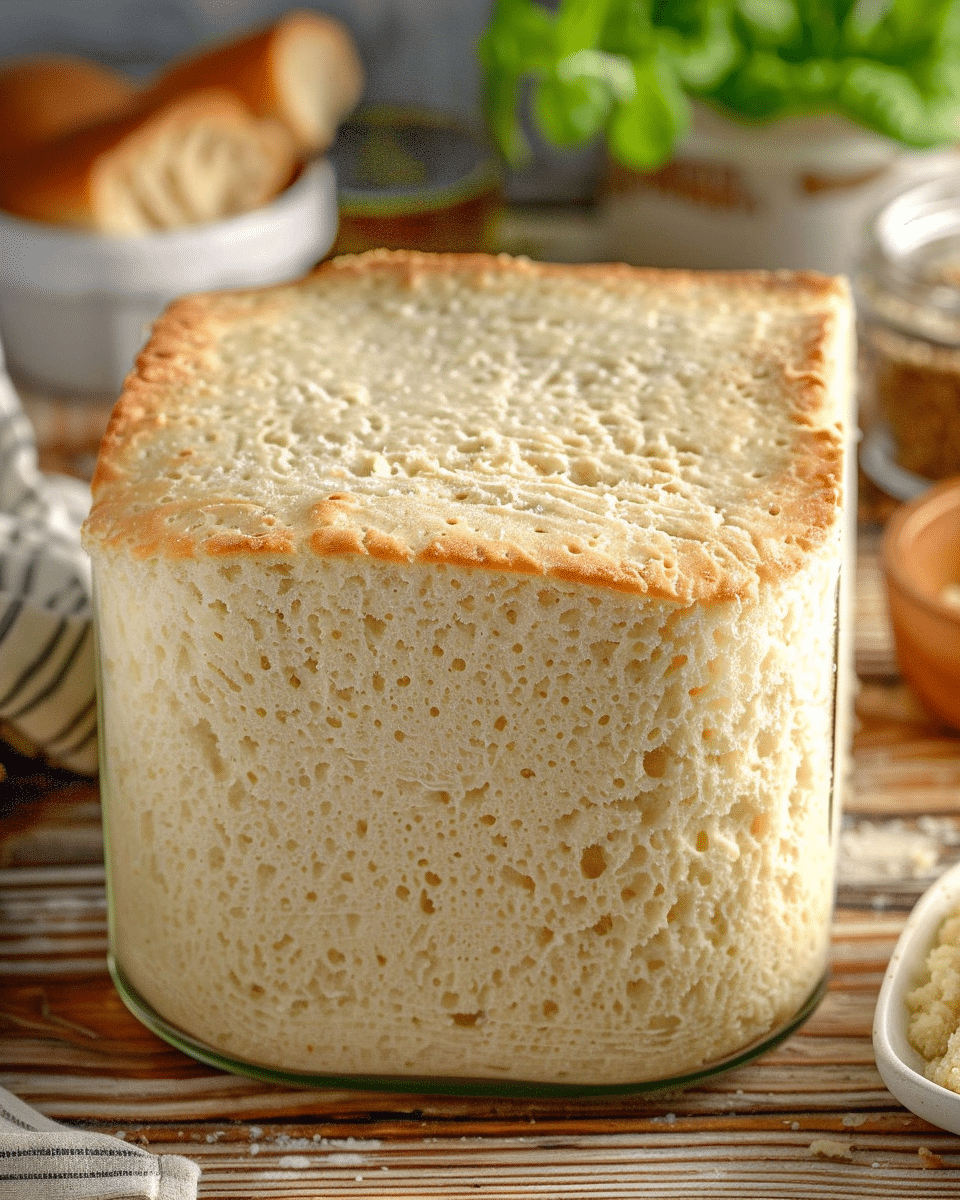
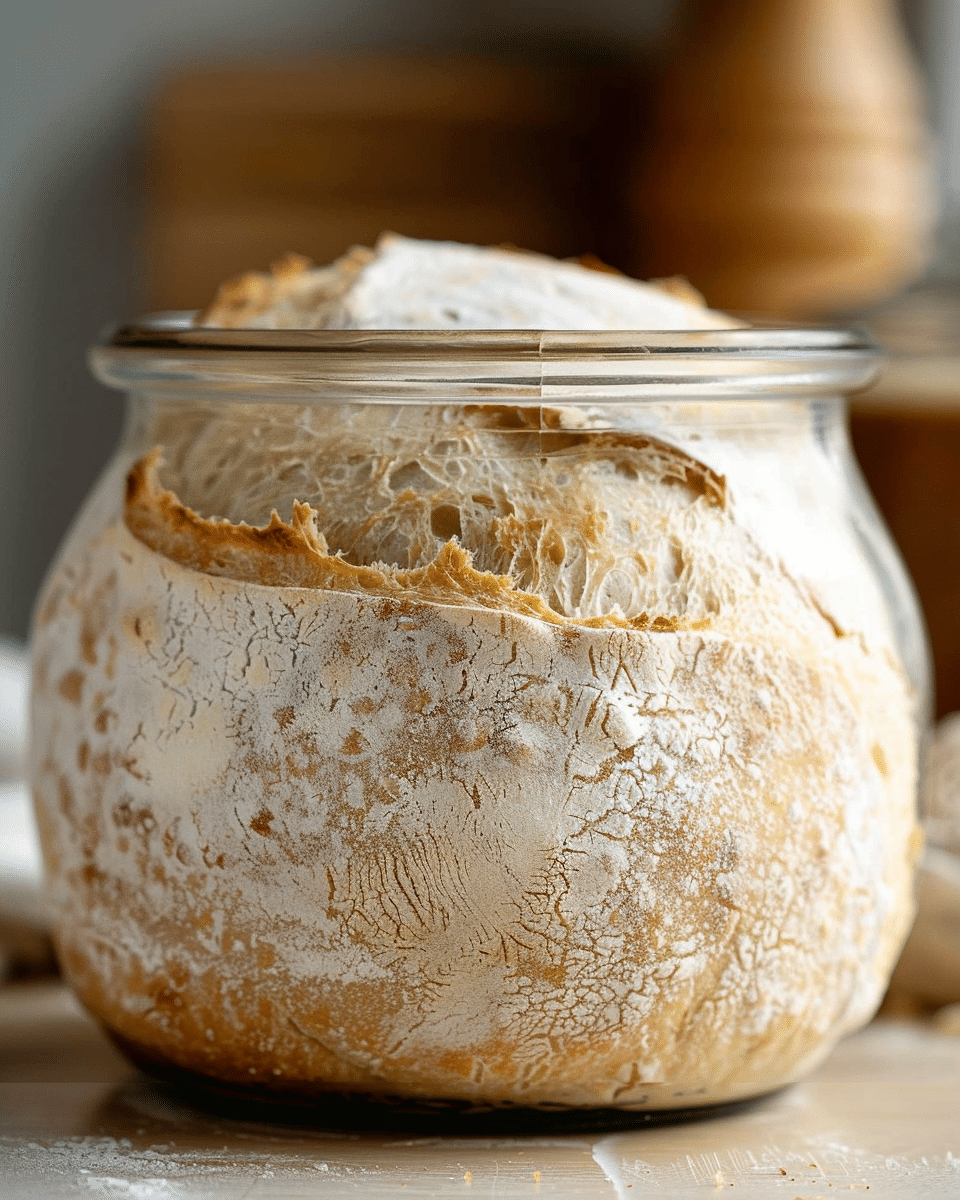
I love this process because it gives me total control over my baking—no commercial yeast needed. Using whole grain flour at the beginning kickstarts a robust fermentation, and transitioning to all-purpose flour keeps things consistent and economical. It’s deeply satisfying to watch the starter grow stronger each day, and once it’s active, I can use it over and over again for fresh, naturally leavened bakes.
Ingredients
(Here’s a tip: Check out the full list of ingredients and measurements in the recipe card below.)
For the sourdough starter 100 g whole grain rye flour or whole wheat flour (preferably organic) 500 g unbleached all-purpose flour (preferably organic), for daily feedings 1 litre filtered or spring water, at room temperature
Directions
Day 1 – Initial Mix I begin by weighing my clean, empty glass jar and recording the weight. Then I add 100 g whole wheat or rye flour and 100 g filtered water. I stir with a fork until well combined—it’ll be thick. I scrape down the sides with a spatula, loosely cover the jar, and mark the starter’s height with a rubber band. I let it rest at room temperature for 24 hours.
Day 2 – Check Activity I check for bubbles—some small activity might be visible, but none is okay too. I keep the lid loose and let it rest at room temperature for another 24 hours.
Day 3 – First Feeding I discard half of the starter (keeping 100 g), then feed it with 100 g all-purpose flour and 100 g room temperature water. I mix, scrape down the sides, loosely cover it again, and rest it for another 24 hours.
Day 4 – Continue Feeding I discard down to 100 g of starter and repeat the feeding: 100 g flour + 100 g water. I continue the same process—stirring well, scraping, and covering loosely. By now, some bubbling and rising should be noticeable.
Day 5–6 – Daily Feedings Continue Each day, I discard all but 100 g of starter, then feed with 100 g flour and 100 g water. I continue to watch for stronger bubbling, a pleasant aroma, and a rise of at least double in volume.
Day 7 – Maturity Test Once the starter consistently doubles in size and bubbles actively, I test it by dropping a spoonful into a bowl of water. If it floats, it’s ready for baking. If not, I continue the feeding schedule daily until it passes.
Maintenance (After Day 7)
If I bake frequently, I keep the starter at room temperature and feed it daily, letting it peak for 4–6 hours before using.
If I bake occasionally, I store it in the fridge and feed it once a week: discard all but 100 g, feed, let it sit at room temperature for 1–2 hours, then refrigerate.
Servings and Timing
Yield: Enough starter for multiple bakes Prep Time: 20 minutes (initial setup) Cook Time: — Total Time: 20 minutes daily for 7 days
Variations
I start with rye flour when I want faster fermentation—it’s more nutrient-rich and active.
I’ve added a tablespoon of pineapple juice or apple cider vinegar on day 1 if I want to help acidify the environment early, though it’s optional.
I sometimes use whole wheat throughout instead of switching to all-purpose for a heartier starter.
Storage/Reheating
There’s no reheating involved, but I keep the starter in a clean glass jar with a loose-fitting lid or cloth secured with a band. I store it in the fridge when not in use and feed it once a week. Before baking, I always bring it to room temp and give it a feeding to wake it up and ensure it’s bubbly and active.
FAQs
Do I need organic flour?
I’ve had the best results with organic flour because it tends to have more natural wild yeast and fewer chemicals that inhibit fermentation, but it’s not mandatory. Unbleached flour is the next best thing.
What’s the best flour to start with?
Whole grain rye or whole wheat flour gives the starter a boost at the beginning. After day 1, I usually switch to all-purpose flour for stability and consistency.
Why is my starter not bubbling?
Sometimes it’s just slow to begin. I make sure to keep it warm (ideally 70–75°F/21–24°C) and stay consistent with daily feedings. I also ensure I’m using filtered or spring water to avoid chlorine.
What’s the purpose of discarding?
Discarding keeps the microbial balance healthy and prevents the starter from growing too large. It also keeps the ratio of food to starter in check for optimal fermentation.
Can I bake with it before day 7?
If the starter doubles in volume within 4–6 hours after a feeding and passes the float test, I go ahead and bake—even if it’s only day 5 or 6. But if it’s sluggish, I keep feeding daily until it’s ready.
Conclusion
This Whole Grain Sourdough Starter is where real artisan baking begins. I love the process—watching it bubble, grow, and come to life with nothing more than flour and water. Once it’s ready, I use it to bake rustic loaves, crusty rolls, pancakes, waffles, and so much more. It’s not just a recipe—it’s a living, breathing kitchen companion I come back to again and again.
Create your own bubbly, active sourdough starter from scratch using whole grain flour and water—perfect for artisan bread baking at home.
Author:Sarah
Prep Time:20 Minutes (active time)
Total Time:20 Minutes (plus 7 days of fermentation)
Yield:7 servings (sufficient mature starter for multiple bakes)
Category:Breads
Method:Fermentation
Cuisine:Artisan baking
Diet:Vegan
Ingredients
→ For the Sourdough Starter:
100 g whole grain rye flour or whole wheat flour (preferably organic)
500 g unbleached all-purpose flour (for feedings, preferably organic)
1 litre filtered or spring water, at room temperature
Instructions
Day 1: Record the empty jar’s weight. Add 100 g whole wheat or rye flour + 100 g water. Mix well with a fork. Scrape down sides, cover loosely, and place a rubber band around the jar to mark the starter height. Let sit at room temperature (20–24°C) for 24 hours.
Day 2: Check for bubbles (minor activity is fine). No feeding yet. Cover and let rest another 24 hours.
Day 3: Discard half (retain 100 g). Add 100 g all-purpose flour + 100 g water. Mix, scrape sides, cover loosely, and let rest 24 hours.
Day 4: Repeat the discard and feeding: Keep 100 g starter, add 100 g flour + 100 g water. Mix and rest for 24 hours.
Day 5–6: Continue discarding all but 100 g of starter, and feeding with 100 g flour + 100 g water daily. By now, it should show more bubbles and rise predictably.
Day 7+: Test for readiness — drop a spoonful into a bowl of water. If it floats, it’s ready for baking. If not, continue daily feeding until it does.
Maintenance:
Frequent Bakers: Keep at room temperature, feed daily, and use 4–6 hours after feeding when peaked.
Occasional Bakers: Store in fridge. Once a week, discard all but 100 g, feed, let rest 1–2 hours at room temp, then return to the fridge.
Notes
Always use filtered or spring water to avoid chlorine disrupting fermentation.
Starter behavior will vary with temperature, flour type, and humidity.
It’s normal for growth to slow around days 4–5 — keep feeding consistently.
Whole grain flour kick-starts fermentation, while all-purpose flour maintains it.