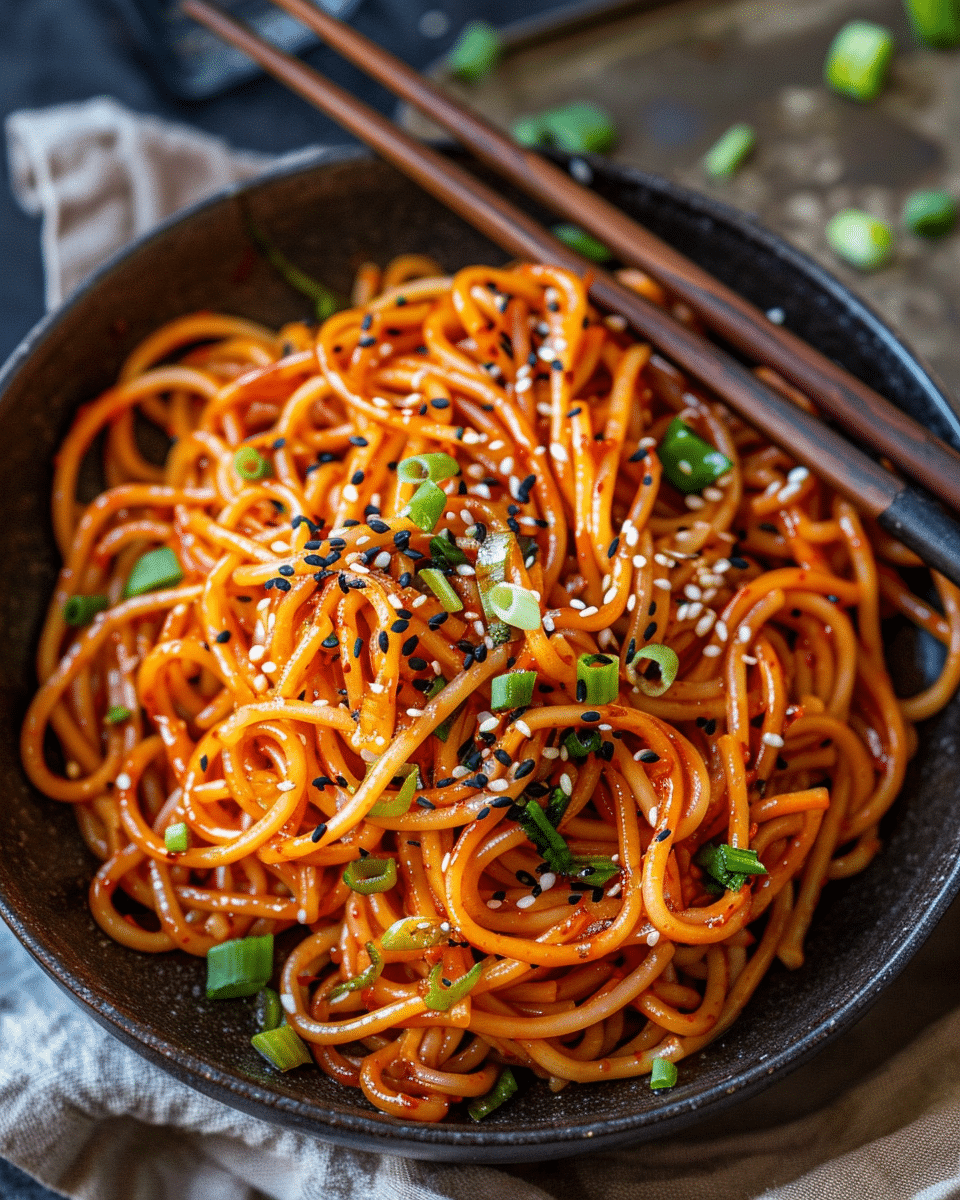
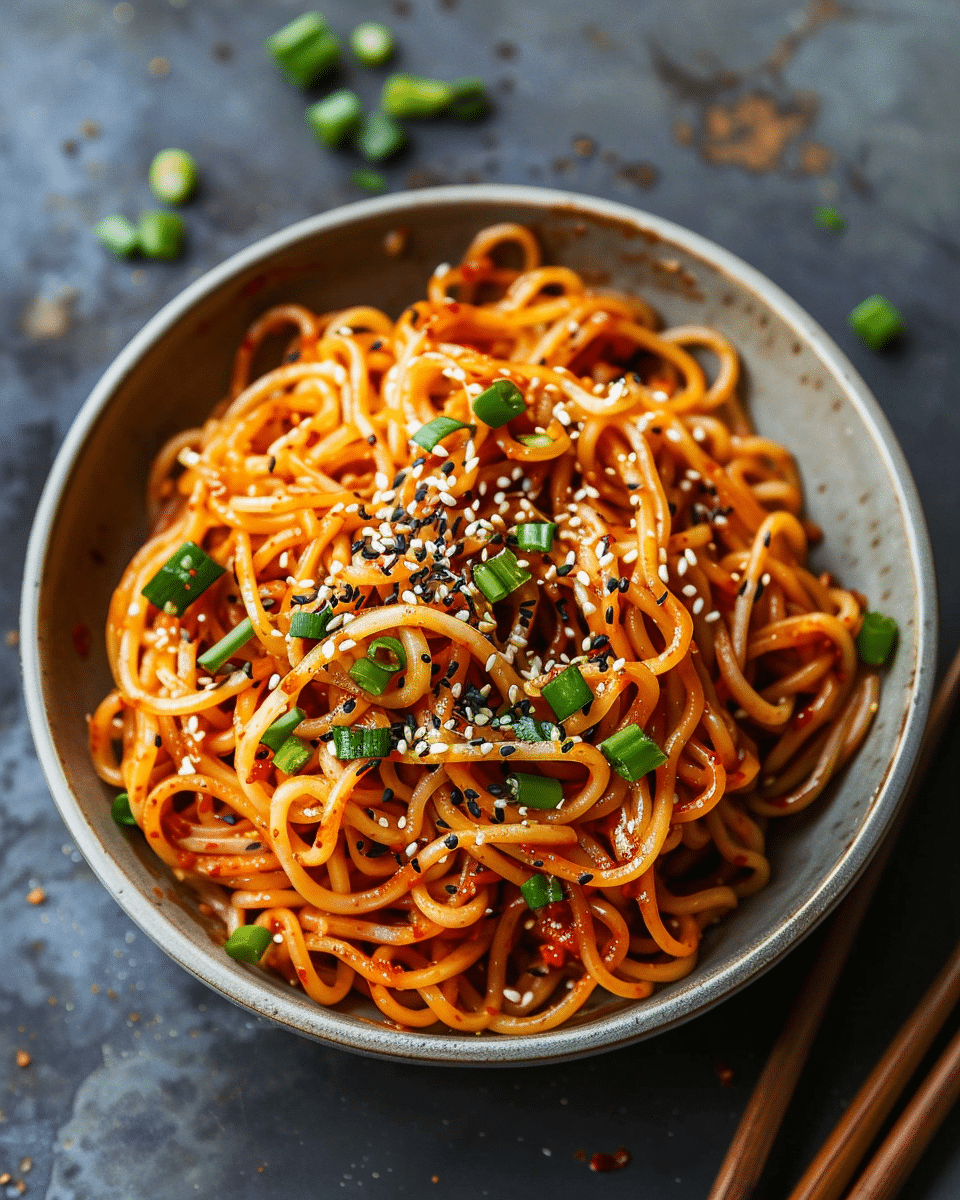
I enjoy how this recipe brings together heat, umami, and just a hint of sweetness. It’s simple to make, totally customizable, and works with either rice noodles or pantry staples like linguine. I can easily add my favorite veggies or protein to make it a full meal, and the gochujang-based sauce clings perfectly to every strand of noodle.
Ingredients
(Here’s a tip: Check out the full list of ingredients and measurements in the recipe card below.)
8 oz rice noodles or linguine
1 tablespoon sesame oil
3 tablespoons gochujang (Korean chili paste)
1 tablespoon soy sauce
1 tablespoon rice vinegar
1 tablespoon maple syrup or honey
2 teaspoons grated fresh ginger
2 cloves garlic, minced
1/2 cup reserved noodle water
1 scallion, sliced (for garnish)
Toasted sesame seeds (for garnish)
Optional: sautéed veggies like bok choy or mushrooms
Directions
I cook the noodles according to the package instructions, remembering to reserve 1/2 cup of the cooking water before draining.
In a skillet over medium heat, I warm the sesame oil. Then I sauté the garlic and ginger for about 1–2 minutes until they’re fragrant.
I whisk in the gochujang, soy sauce, rice vinegar, and maple syrup. This simmers for another 1–2 minutes.
I add the cooked noodles and the reserved water to the skillet, tossing everything together until the noodles are well coated.
I let the noodles simmer for 2–3 minutes so the sauce can thicken slightly.
Finally, I serve the noodles hot, topped with scallions and sesame seeds. Sometimes I like to throw in some sautéed bok choy or mushrooms for extra texture and flavor.
Servings and timing
This recipe makes 2 servings and takes just 15 minutes from start to finish—perfect for when I need a quick, flavor-packed dinner on a busy night.
Variations
When I want more protein, I add grilled tofu, a fried egg, or even shredded chicken. For extra vegetables, I stir-fry broccoli, bell peppers, or snap peas and mix them in. If I’m in the mood for more heat, I add a teaspoon of chili flakes or extra gochujang.
Storage/reheating
If I have leftovers, I store them in an airtight container in the fridge for up to 3 days. When reheating, I add a splash of water or broth to loosen the sauce before warming it in a pan or microwave. The noodles absorb the sauce as they sit, so this helps bring them back to their original texture.
FAQs
What can I use if I don’t have gochujang?
I’ve tried using a mix of sriracha and miso paste as a substitute in a pinch, but gochujang really gives the dish its unique depth and flavor.
Can I make this dish gluten-free?
Yes, I just use gluten-free rice noodles and make sure to choose tamari instead of soy sauce. I always double-check that my gochujang is gluten-free too.
Is this recipe spicy?
It has a moderate heat level, but I can always adjust the spice by adding more or less gochujang depending on my preference.
Can I meal prep this in advance?
I can cook the noodles and sauce separately, then store them in the fridge. When I’m ready to eat, I heat everything together with a splash of water to refresh the sauce.
What vegetables go well in this dish?
I love adding sautéed bok choy, mushrooms, spinach, or shredded carrots. They all pair beautifully with the bold flavors of the sauce.
Conclusion
These Korean Gochujang Noodles are my go-to when I want something fast, flavorful, and satisfying. I can whip them up in no time, and they always impress with their bold, spicy flavor. Whether I enjoy them on their own or bulk them up with veggies and protein, they never disappoint.