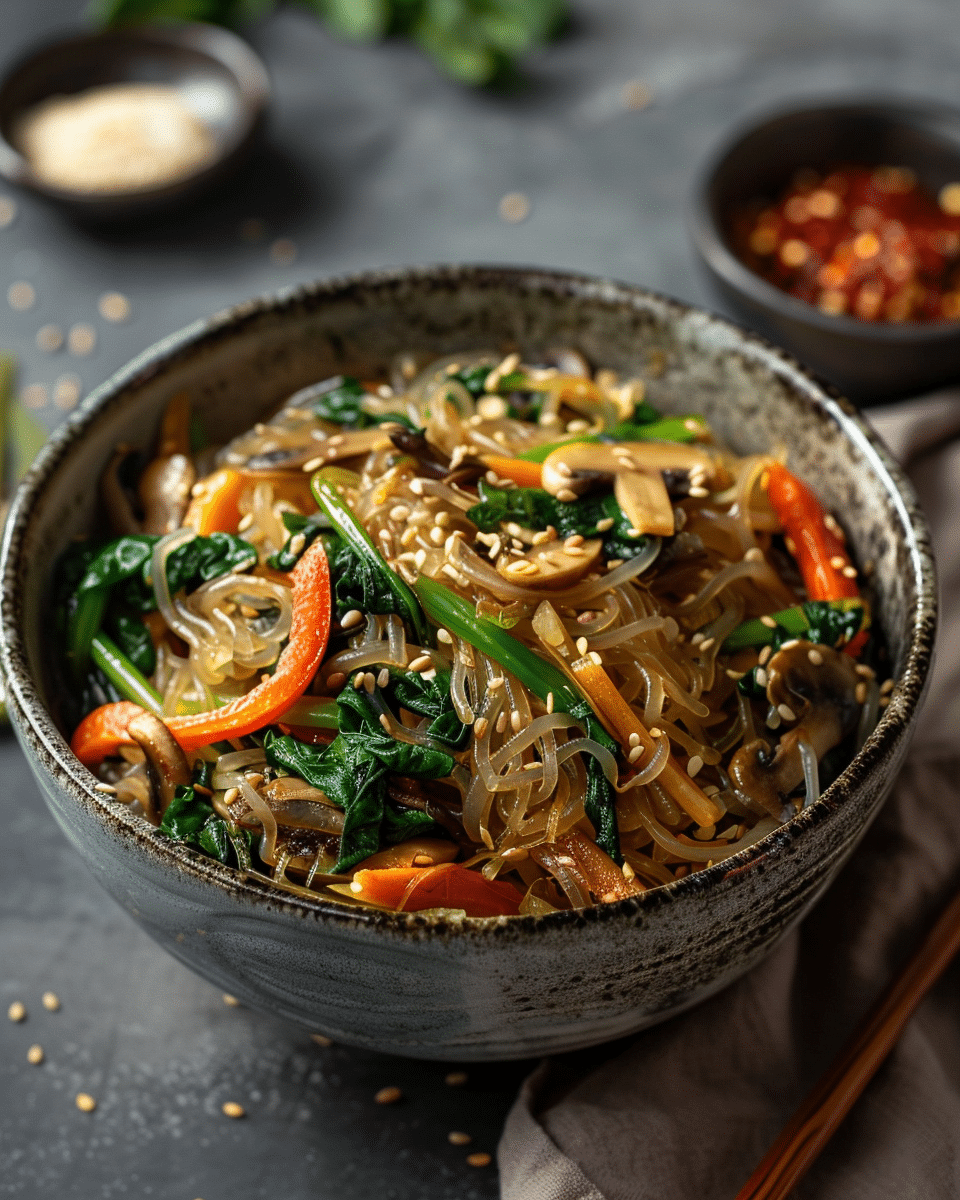
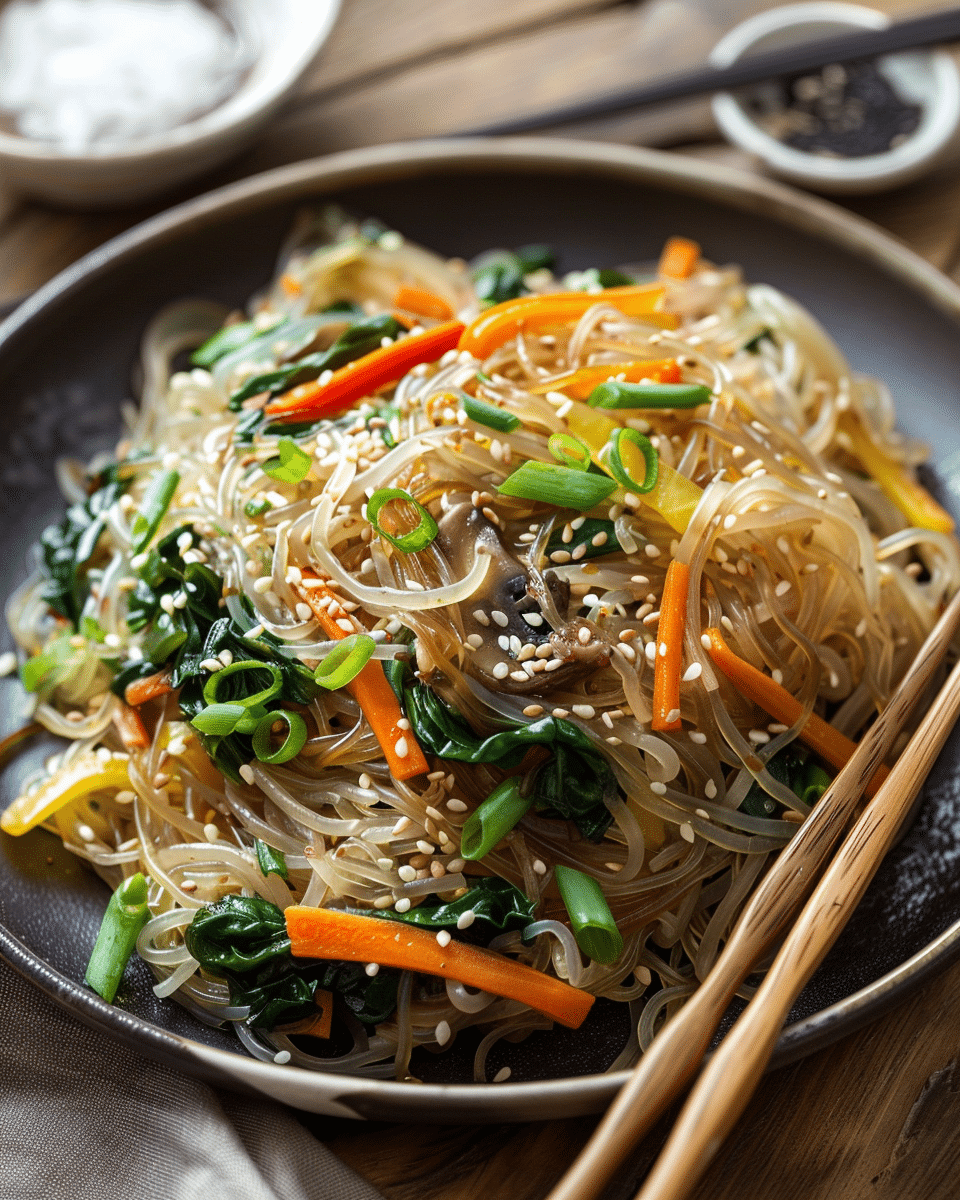
I enjoy this recipe because it brings together a perfect balance of sweet and savory flavors. I love how the sesame oil and soy sauce coat every ingredient, while the mix of vegetables adds freshness and texture. I also appreciate how versatile it is, since I can easily swap the protein or adjust the vegetables depending on what I have at home.
Ingredients
(Here’s a tip: Check out the full list of ingredients and measurements in the recipe card below.)
2 lb thin-sliced beef or chicken, tofu, or shrimp
1 lb Korean sweet potato noodles (glass noodles)
3 medium carrots, julienned
1 large white onion, thinly sliced
1/2 bunch green onions, chopped
6 garlic cloves, minced
1/2 lb spinach leaves
4 tbsp sesame oil, divided
1 tbsp olive oil
6 tbsp soy sauce or tamari
3 tbsp brown sugar
Directions
I start by bringing a large pot of water to a boil with a drizzle of olive oil. I add the sweet potato noodles and cook them for about 5 to 6 minutes, then drain and set them aside.
In a skillet over high heat, I cook the beef until browned. While it cooks, I season it with half of the soy sauce, sesame oil, and brown sugar. Once done, I set it aside.
In another skillet, I heat the olive oil and add the carrots and onion. I cook them until softened, then I add the remaining soy sauce, sesame oil, and brown sugar. I stir in the garlic and green onions and cook for another minute.
I add the spinach and stir until it wilts. Then I combine all the vegetables and beef with the cooked noodles in a large bowl.
I toss everything together well until evenly coated and serve it warm, sometimes garnishing with extra green onions.
Servings and Timing
I get about 10 servings from this recipe.
I usually need around 1 hour total, including about 30 minutes of prep time and 30 minutes of cooking time.
Variations
I sometimes replace beef with tofu or chicken for a different twist. I also like adding mushrooms or bell peppers for extra texture. When I want some heat, I mix in a bit of gochujang or chili flakes. I can also make it fully vegetarian by skipping the meat and adding more vegetables.
Storage/reheating
I store leftovers in an airtight container in the refrigerator for up to 4 days. I find that the flavors deepen over time, making it even more delicious the next day.
For reheating, I warm it in a skillet over medium heat with a splash of water or a little oil to loosen the noodles. I can also use the microwave, but I prefer the skillet for better texture.
FAQs
Can I make Japchae ahead of time?
I often make Japchae ahead of time because it stores well and reheats nicely. I find it perfect for meal prep or gatherings.
Are sweet potato noodles gluten-free?
I use sweet potato noodles because they are naturally gluten-free, but I make sure to use tamari instead of regular soy sauce if I want the whole dish to stay gluten-free.
Can I eat Japchae cold?
I sometimes enjoy Japchae cold or at room temperature. I find it still tastes great and makes a convenient leftover meal.
What can I use instead of beef?
I like using chicken, shrimp, tofu, or even just vegetables. The recipe adapts easily to different preferences.
Why do my noodles stick together?
I make sure not to overcook the noodles and I toss them with a bit of oil after draining. This helps keep them from clumping together.
The Best Japchae
Conclusion
I love how Japchae combines simple ingredients into a vibrant and flavorful dish. It feels both nourishing and satisfying, and I enjoy how easy it is to customize. Whether I make it for a gathering or a quiet meal at home, it always turns out delicious.
The Best Japchae with perfectly cooked glass noodles, fresh vegetables, and a rich sweet and savory sauce. This Korean favorite is ideal for family dinners or special gatherings
Author:Sarah
Prep Time:30 minutes
Cook Time:30 minutes
Total Time:1 hour
Yield:10 servings
Category:Main Course
Method:Stir-fry
Cuisine:Korean
Diet:Gluten Free
Ingredients
2 lb thin-sliced beef (or chicken, tofu, or shrimp)
1 lb Korean sweet potato noodles (glass noodles)
3 medium carrots (julienned)
1 large white onion (thinly sliced)
½ bunch green onions (chopped)
6 garlic cloves (minced)
½ lb spinach leaves
4 tbsp sesame oil (divided)
1 tbsp olive oil
6 tbsp soy sauce (or tamari for gluten-free)
3 tbsp brown sugar
Instructions
Bring a large pot of water to a boil with a drizzle of olive oil. Cook sweet potato noodles for 5–6 minutes, then drain and set aside.
In a skillet over high heat, cook beef until browned. Season with half the soy sauce, sesame oil, and brown sugar. Remove and set aside.
In another skillet, heat olive oil. Add carrots and onion; cook until softened.
Stir in remaining soy sauce, sesame oil, and brown sugar. Add garlic and green onions; cook for 1 minute.
Add spinach and cook until wilted.
Combine noodles, cooked beef, and vegetables in a large bowl. Toss well to evenly coat.
Serve warm and garnish with extra green onions if desired.
Notes
For a vegetarian version, substitute tofu or mushrooms.
Rinse noodles with cold water to prevent sticking.
Add a spoon of gochujang for a spicy twist.
Best served fresh but reheats well for meal prep.