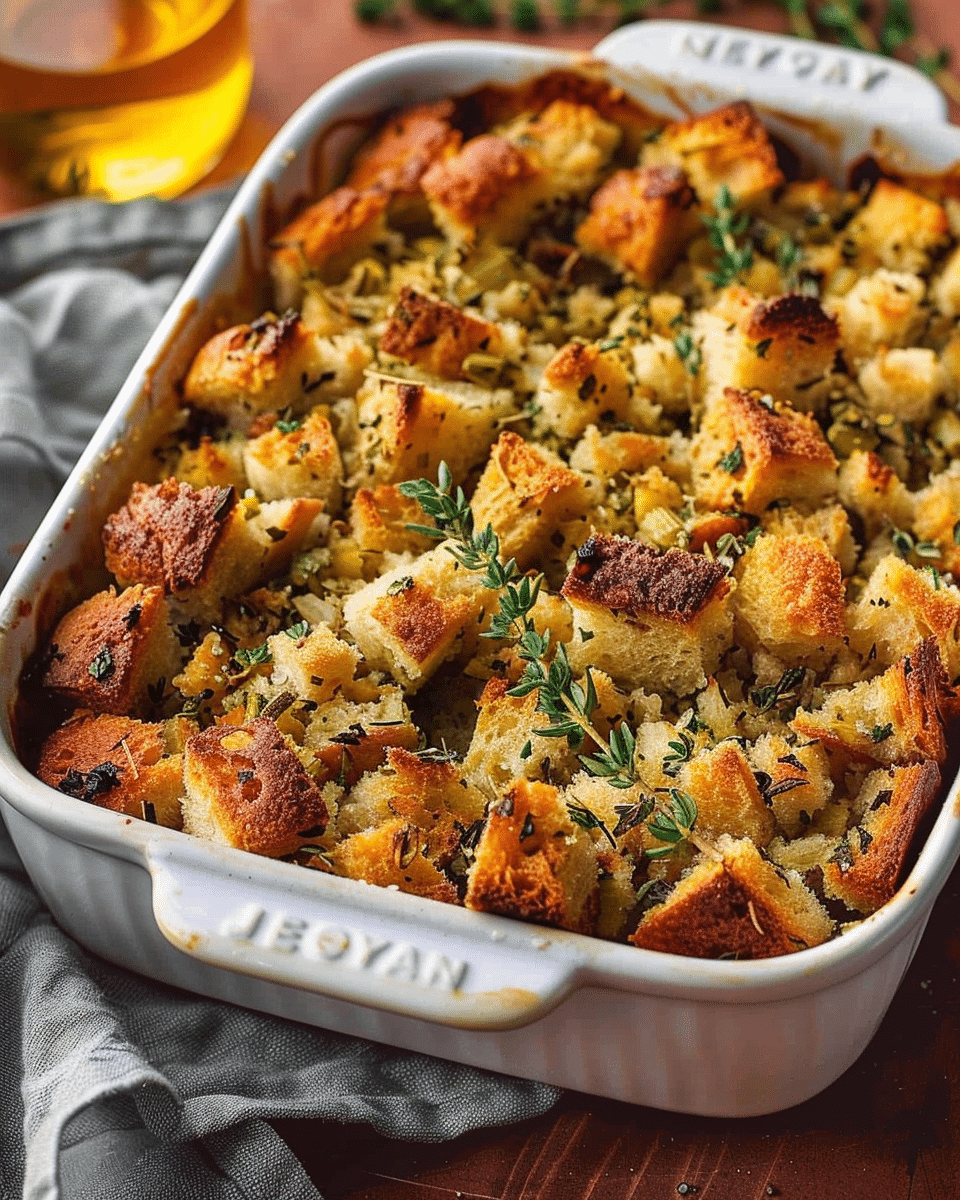
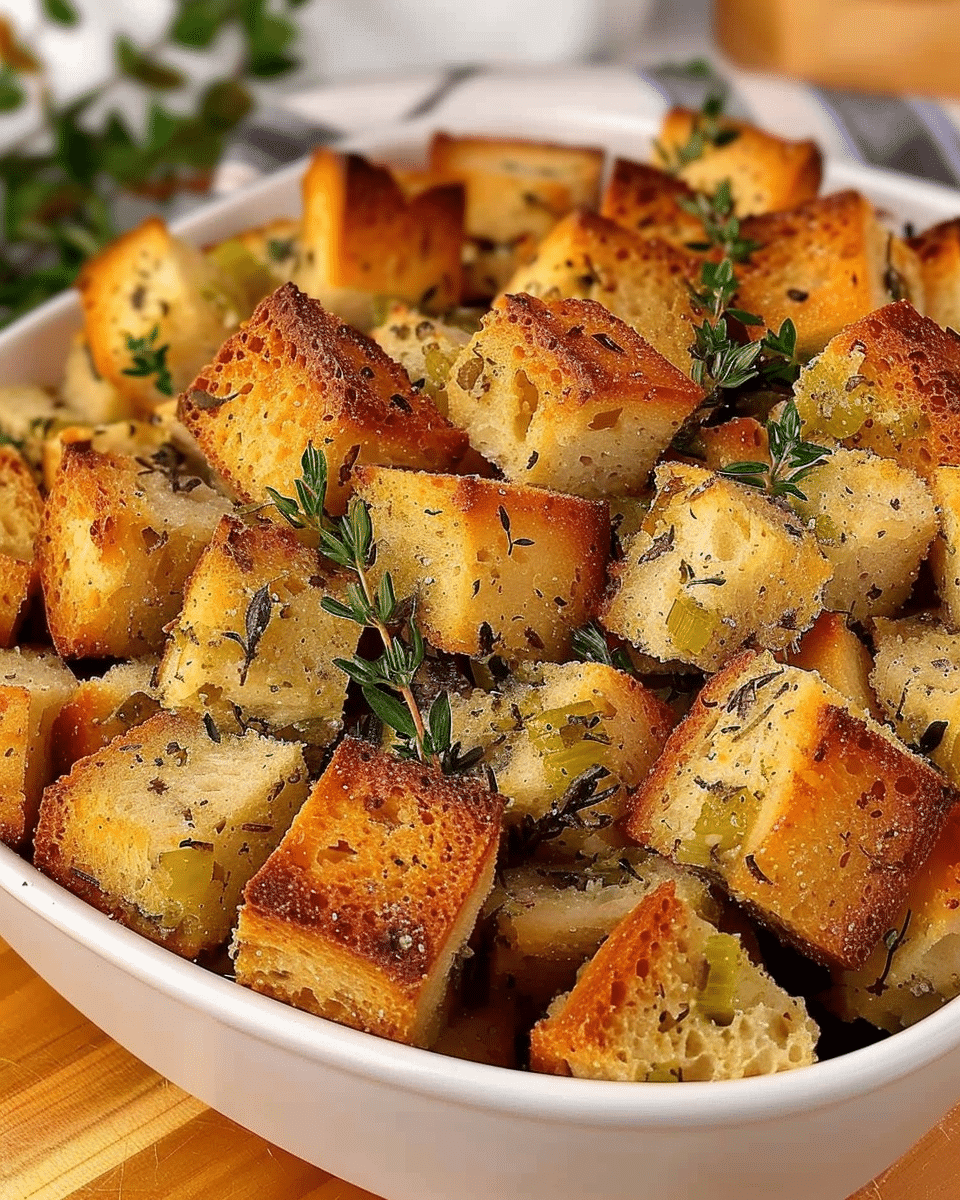
I love how this stuffing hits all the right notes—savory, herby, tender in the center with those irresistible crispy edges. It’s made from simple ingredients but tastes like something special thanks to layers of flavor from caramelized onions, garlic, and fresh herbs like sage and rosemary. I also like that it’s flexible—I can use vegetable broth for a vegetarian version or add sausage or mushrooms to turn it into a heartier dish. It’s easy to make ahead, bake, and reheat, which makes my holiday cooking so much easier.
Ingredients
(Here’s a tip: Check out the full list of ingredients and measurements in the recipe card below.)
Bread mixture:
18–24 oz cubed bread (about 12–14 cups, 1/2-inch pieces; stale or toasted)
2 1/2 cups chicken or vegetable broth (low-sodium preferred)
1 cup unsalted butter
2 large eggs (room temperature)
6 garlic cloves, minced
3 cups chopped sweet onion (about 2 large)
2 cups diced celery
For topping:
Fresh herbs for sprinkling (sage, parsley, or rosemary)
Directions
I cut the bread into 1/2-inch cubes and, if it’s not already stale, I toast it at 350°F for about 15 minutes, stirring halfway through. Once the cubes are dry and lightly golden, I let them cool slightly and transfer them to a large mixing bowl.
In a large skillet, I melt the butter over medium heat. I add the chopped onions, celery, and a pinch of salt, then cook for 8–10 minutes, stirring occasionally, until soft and beginning to caramelize.
I stir in the garlic and cook for 1 more minute until fragrant. Then I add the fresh herbs—sage, parsley, and rosemary—and cook for another minute to release their oils and deepen the flavor.
I pour in 1 cup of broth, scraping up any browned bits from the pan, and let it simmer for a minute before removing it from the heat.
I pour the hot vegetable and broth mixture over the bread cubes and gently toss everything together until all the bread is evenly coated.
In a separate bowl, I whisk the remaining 1 1/2 cups broth with the room-temperature eggs. I pour this over the bread mixture and gently stir again to combine everything thoroughly.
I transfer the mixture to a buttered baking dish and spread it evenly. I bake the stuffing at 350°F for 45–50 minutes. If the top starts to brown too quickly, I loosely cover it with foil for the first 30 minutes, then uncover it for the final 15–20 minutes to let the top crisp up.
Once baked, I let the stuffing rest for 10 minutes to set before serving. I finish it with a sprinkle of fresh herbs right before serving for extra color and aroma.
Servings and timing
This recipe makes 10 generous servings and takes 1 hour and 15 minutes total—including 25 minutes of prep time and 50 minutes of baking. It’s perfect for feeding a holiday crowd or enjoying as leftovers the next day.
Variations
I like to play with this base recipe depending on what I’m serving it with:
Add sausage: I brown some crumbled Italian sausage and mix it in with the vegetables.
Add mushrooms: I sauté chopped mushrooms along with the onions and celery for an earthier flavor.
Make it nutty: I toss in toasted pecans or walnuts for added crunch.
Sweeten it up: I stir in chopped dried cranberries or diced apple for a touch of sweetness.
Use cornbread: I swap the bread cubes for cornbread for a Southern-style twist.
Storage/Reheating
I store leftover stuffing in an airtight container in the fridge for up to 4 days. To reheat, I cover it with foil and bake at 350°F until warmed through (about 20–25 minutes). If it feels dry, I drizzle a little broth over the top before reheating. I’ve also frozen it successfully—wrapped tightly—for up to a month, then thawed and reheated the same way.
FAQs
Can I make this stuffing ahead of time?
Yes, I often assemble it the day before and store it covered in the fridge. Right before baking, I let it sit at room temperature for about 30 minutes, then bake as directed.
What type of bread works best?
I like using a sturdy white bread, French bread, or sourdough. It’s important that the bread is slightly stale or toasted so it holds up to the broth without becoming mushy.
Can I make this stuffing vegetarian?
Absolutely. I just use vegetable broth instead of chicken broth and keep everything else the same.
What’s the best way to keep the stuffing moist?
The key is balancing the broth and eggs properly. I also cover the dish for the first part of baking to lock in moisture, then uncover it to crisp the top.
Can I cook this stuffing inside a turkey?
I prefer baking it separately for food safety and better texture. If I really want that “from the bird” flavor, I spoon a little turkey drippings over the baked stuffing before serving.
Conclusion
This Classic Herb Stuffing is everything I want in a traditional holiday side—fragrant, buttery, and perfectly balanced between soft and crispy. It’s the kind of dish that brings warmth to the table and pairs effortlessly with turkey, gravy, and all the other seasonal favorites. Once I made it from scratch like this, I never went back to the boxed stuff. It’s become a permanent part of my holiday traditions—and I know it’ll become one of yours too.
Fresh herbs for sprinkling (sage, parsley, or rosemary)
Instructions
Toast the Bread: If using fresh bread, cut into ½-inch cubes and toast at 350°F for 15 minutes, stirring halfway. Let cool and transfer to a large mixing bowl.
Sauté Vegetables: In a skillet, melt butter over medium heat. Add onions, celery, and a pinch of salt. Cook for 8–10 minutes until softened and slightly caramelized. Add garlic; cook 1 minute more.
Add Herbs & Broth: Stir in sage, parsley, and rosemary. Cook 1 minute. Add 1 cup broth and simmer, scraping the skillet bottom.
Combine with Bread: Pour the hot herb mixture over the toasted bread and toss gently to coat.
Make Egg Mixture: In a separate bowl, whisk remaining 1½ cups broth with the eggs. Pour over bread mixture and gently stir to combine.
Bake: Transfer to a buttered baking dish and spread evenly. Bake at 350°F for 45–50 minutes. Cover with foil for the first 30 minutes if needed, then uncover to brown the top.
Rest & Serve: Let rest 10 minutes before serving. Top with fresh herbs before serving for added color and flavor.
Notes
Use room-temperature eggs for better integration into the stuffing.
Toasting the bread ensures it absorbs the broth evenly without becoming soggy.
Low-sodium broth allows you to control salt levels more precisely.
Fresh herbs offer the best aroma and flavor, but dried versions work in a pinch.
Cover with foil if the top browns too quickly during baking.